 Explore
Canggu
Explore
Canggu
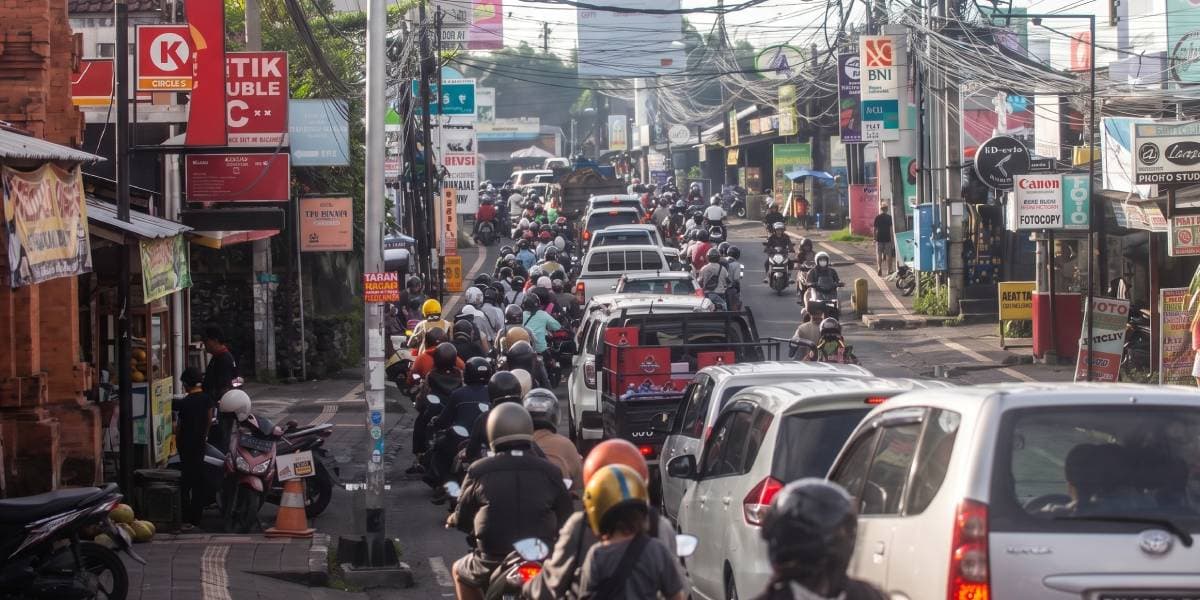
If you have spent even a few hours around Canggu recently, you know the feeling of watching a breezy ten-minute scooter trip morph into an endless crawl behind delivery vans, construction trucks, and tourist taxis.
Between viral videos of cars slipping off the Shortcut and daily gridlock around Kerobokan, traffic has officially become the number one topic of conversation across Canggu cafes and villas. Here is the realistic breakdown of why traffic gets so choked, what road projects are actually under construction, and how to navigate Canggu like a seasoned local without losing your sanity.
Quick Summary: Canggu Traffic at a Glance
Canggu traffic is congested because rapid development outpaced a rural road network that still relies on a single narrow arterial route (Jl. Raya Denpasar to Tanah Lot via Simpang Kerobokan). A new 4.7 km relief corridor connecting Berawa, Umalas, and Kedampang to Teuku Umar Barat is under active construction for late 2026. Until it opens, ride a scooter instead of taking cars, avoid rush hours (7:30 to 9:30 AM and 4:30 to 7:30 PM), and stay near your daily hangouts.
Table of Contents
1. Why Canggu's Traffic Has Gotten So Bad
Not long ago, Canggu was a peaceful network of coastal rice-farming banjars. Life moved to the rhythms of local ceremonies, morning markets, and unpaved farming paths meant for bicycles and light motorbikes. Nobody back then envisioned fleets of seven-seater tourist vans, airport shuttles, concrete mixers, and food delivery riders traversing these lanes every few seconds.
Over the last decade, Canggu transformed into Bali's premier magnet for remote workers, wellness seekers, and holidaymakers. Luxury villas, beach clubs, coworking compounds, and specialty cafes popped up across every available plot. But while commercial real estate surged forward at breakneck speed, the surrounding road layout barely changed.
Government leaders have candidly recognized how critical this gap has become. In August 2026, Badung Regent I Wayan Adi Arnawa pointed out that acute traffic jams and stretched infrastructure pose an urgent threat to visitor comfort and tourism sustainability, directly citing Canggu and neighboring Tibubeneng as the most pressured zones in the regency.
2. The Core Bottleneck: One Road In, One Road Out
Take a closer look at a regional map and the structural challenge reveals itself immediately: Jl. Raya Denpasar to Tanah Lot, passing straight through the Kerobokan intersection, is functionally the only primary access route leading into Canggu and continuing onward toward Tanah Lot.
According to regional transport assessments, this roadway falls short of the typical 11-meter width recommended for major arterial routes. It simply lacks the physical width to absorb the volume of cars, supply trucks, and motorbikes pouring in from Denpasar, the airport, and Kuta.
During morning commutes, sunset hours, and busy holiday periods, cars on this corridor frequently crawl at walking speeds for hours on end. The bottleneck regularly backs up far beyond Canggu itself, spilling deep into surrounding arteries like Jl. Dalung to Abianbase.
Because there is virtually no backup route, even a minor hiccup (such as a stalled delivery truck, a religious ceremony, or roadside trench work) creates an immediate ripple effect that brings traffic across the entire district to a grinding halt.
3. A Quick History of the Famous Shortcut
Anyone who spends a season in Canggu eventually develops a love-hate relationship with "The Shortcut."
Connecting Berawa and Batu Bolong directly through open rice paddies, the Shortcut began decades ago as an informal dirt path used by local farmers tending crops or riding bicycles (read our in-depth guide to the Canggu Shortcut: route, rules, and survival tips). As traffic on the main avenues swelled, drivers and riders began taking this route, paving and patching sections gradually over time.
The problem is that the Shortcut was never designed, graded, or widened as a proper two-way municipal thoroughfare. Today, it remains barely wide enough for one car and a scooter to pass side by side. Without a strictly enforced one-way system, two opposing SUVs meeting in the middle can trigger instant gridlock. Drivers are forced into tense games of reverse gear, teetering centimeters away from steep concrete drops into irrigation canals.
Similar attempts by motorists to cut through quiet farming backroads, like the Umalas Tunon pathway, prompted local banjars to step in and install rigid concrete bollards, legally limiting access to motorbikes only to prevent cars from getting wedged between stone walls.
4. The One Project Actually Under Construction
Over the years, regional authorities and community forums have proposed a colorful range of ambitious traffic solutions, including a toll tunnel bored under Kerobokan, large-scale one-way loop systems, and multi-level flyovers or underpasses at the Tibubeneng to Raya Canggu junction. Yet as of late 2026, exactly one major initiative has moved past the planning desk and into actual dirt-moving construction:
The Berawa to Umalas to Kedampang to Teuku Umar Barat relief corridor is a brand-new 4.7 km alternative roadway engineered to link Canggu and Berawa directly into Denpasar's Teuku Umar Barat highway network.
The goal of this new link is to siphon substantial volumes of commuter and tourism traffic away from the Kerobokan intersection. Badung Regency's administration has officially confirmed that road grading and bridge construction are actively moving forward, targeting completion of the initial operational phase by late December 2026.
5. Worst Traffic Hotspots & Peak Hours
To avoid spending your holiday staring at taillights, keep these notorious delay points in mind:
| Location & Road Stretch | Peak Hours | Why It Jams |
|---|---|---|
| Jl. Raya Denpasar to Tanah Lot / Kerobokan | 7:30 AM to 9:30 AM & 4:30 PM to 7:30 PM | Primary arterial entrance into Canggu; heavy influx of airport transfers, tours, and commuters. |
| The Shortcut (Berawa to Batu Bolong) | 11:00 AM to 1:00 PM & 4:00 PM to 7:30 PM | Extreme lane narrowing with no formal one-way flow; cars meeting face-to-face lock the route completely. |
| Tibubeneng to Raya Canggu Junction | 4:30 PM to 7:00 PM | Busy intersection linking Seminyak, Umalas, and central Canggu with heavy turning traffic. |
| Jl. Pantai Batu Bolong & Echo Beach Junctions | 4:30 PM to 8:00 PM | Sunset rush toward beach clubs, casual strolls, and parked cars narrowing the roadway. |
| Jl. Dalung to Abianbase | 7:30 AM to 9:00 AM & 5:00 PM to 7:00 PM | Spillover overflow when Kerobokan access points back up. |
Outside of daily morning and sunset rushes, Indonesian long holiday weekends, Christmas and New Year festivities, and the high-season travel peak (July through August) amplify traffic dramatically. A drive between Seminyak and Batu Bolong that takes twenty minutes on a quiet Tuesday can easily stretch past an hour and a half during these holiday surges.
6. Practical Tips for Getting Around Canggu Right Now
While we wait for new bypass roads to open up, adopting a few simple travel habits will save you dozens of hours over the course of your stay:
- Choose a scooter over a car for everyday trips: A two-wheeler allows you to filter through stationary vehicle queues and make use of narrow village connecting lanes that cars physically cannot access. If you are comfortable riding, renting a bike from verified Canggu scooter rental shops remains the single most reliable way to stay mobile. Always ensure you carry an International Driving Permit for Bali and wear a secure helmet.
- Give yourself generous time buffers: Heading to I Gusti Ngurah Rai International Airport or catching a fast boat from Sanur Harbour? Add at least 45 to 60 extra minutes of padding to your trip schedule during peak hours. For early-morning or late-night departures, booking a reputable Canggu airport transfer guarantees your driver arrives on time.
- Check live map traffic before rolling out: Navigation apps like Google Maps and Waze reflect live Canggu traffic conditions with impressive accuracy. Take twenty seconds to review your route before setting off; often a slightly longer loop road is wide open while the direct path is frozen solid red.
- Base yourself close to your daily routine: If you plan to spend eighty percent of your daylight hours surfing Echo Beach and dining around Batu Bolong, choose a villa in Batu Bolong or Pererenan. If you work out of coworking spaces in Berawa, stay in Berawa. Eliminating daily cross-town commutes across the Shortcut saves countless hours each week.
- Know when to skip the Shortcut: If you are feeling exhausted, carrying heavy shopping bags, or carrying a passenger for the first time, take the main paved roads around the perimeter instead. Squeezing along steep drop-offs on the Canggu Shortcut is simply not worth the stress.
- Understand local ride-hailing boundaries: If you rely on Gojek or Grab bike and car pickups, keep in mind that certain beachside hotspots operate pickup restrictions. Review our detailed guide to Grab & Gojek red zones in Canggu to find safe pickup points.
Frequently Asked Questions (FAQ)
Why is Canggu traffic so bad in 2026?
Is the Bali government actually doing anything to fix Canggu traffic?
Will the new relief road completely solve traffic in Canggu?
What is the best way for a tourist to avoid traffic in Canggu?
This guide was last verified on September 21, 2026 by Fares, Editor at Explore Canggu, based in Canggu since 2022. Infrastructure project completion dates represent official government targets and remain subject to field adjustments. It's provided as general local transport information for travelers.
Planning Your Transport in Canggu?
Make sure you understand scooter rental safety, police checkpoints, and airport transfers before you hit the road.
View Trusted Scooter RentalsExplore Related Directories & Guides
Combine your transport knowledge with these related Canggu travel resources:
- The Canggu Shortcut: Bali's Most Notorious Backroad (2026) – Route, one-way car rules, and safety tips.
- Bali Police Checkpoints & Scooter Fines (2026) – Complete tourist safety and legal guide.
- Canggu Scooter Rental Guide – Trusted rental shops, rates, and motorbike models.
- International Driving License Bali Scooter Guide – Rules for foreign licenses in Bali.
- Grab & Gojek Red Zone Rules in Canggu – Local transport zone boundaries and pickup spots explained.
- Canggu Travel Guides Hub – Read comprehensive itineraries and safety guides.